The free-standing part of the chimney
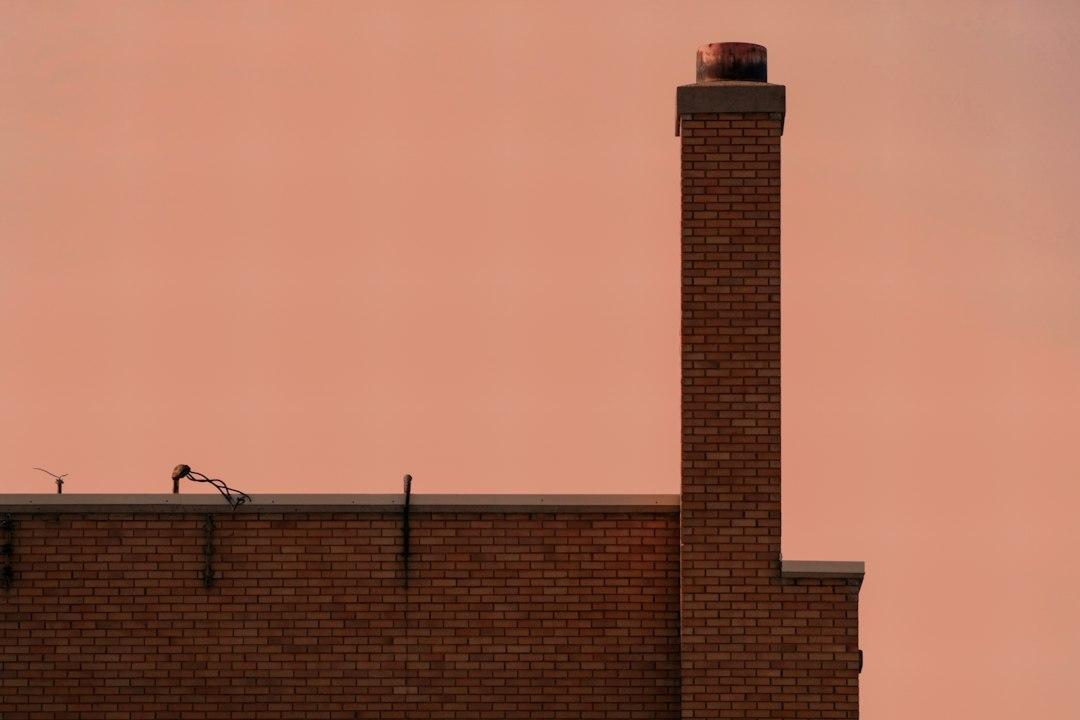
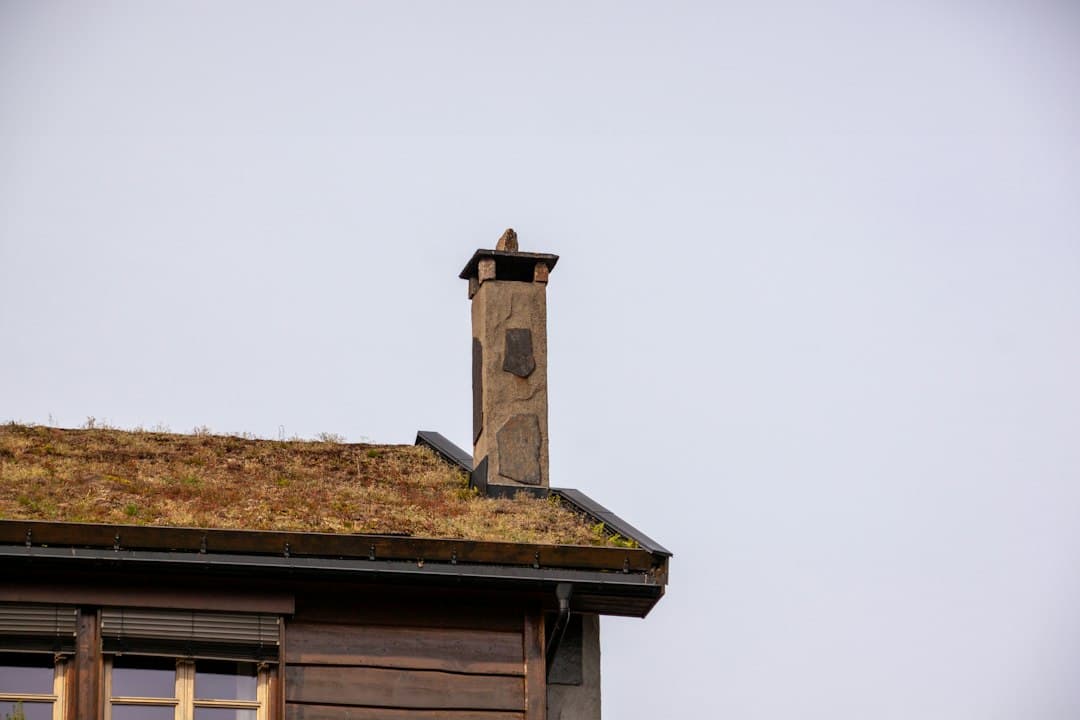
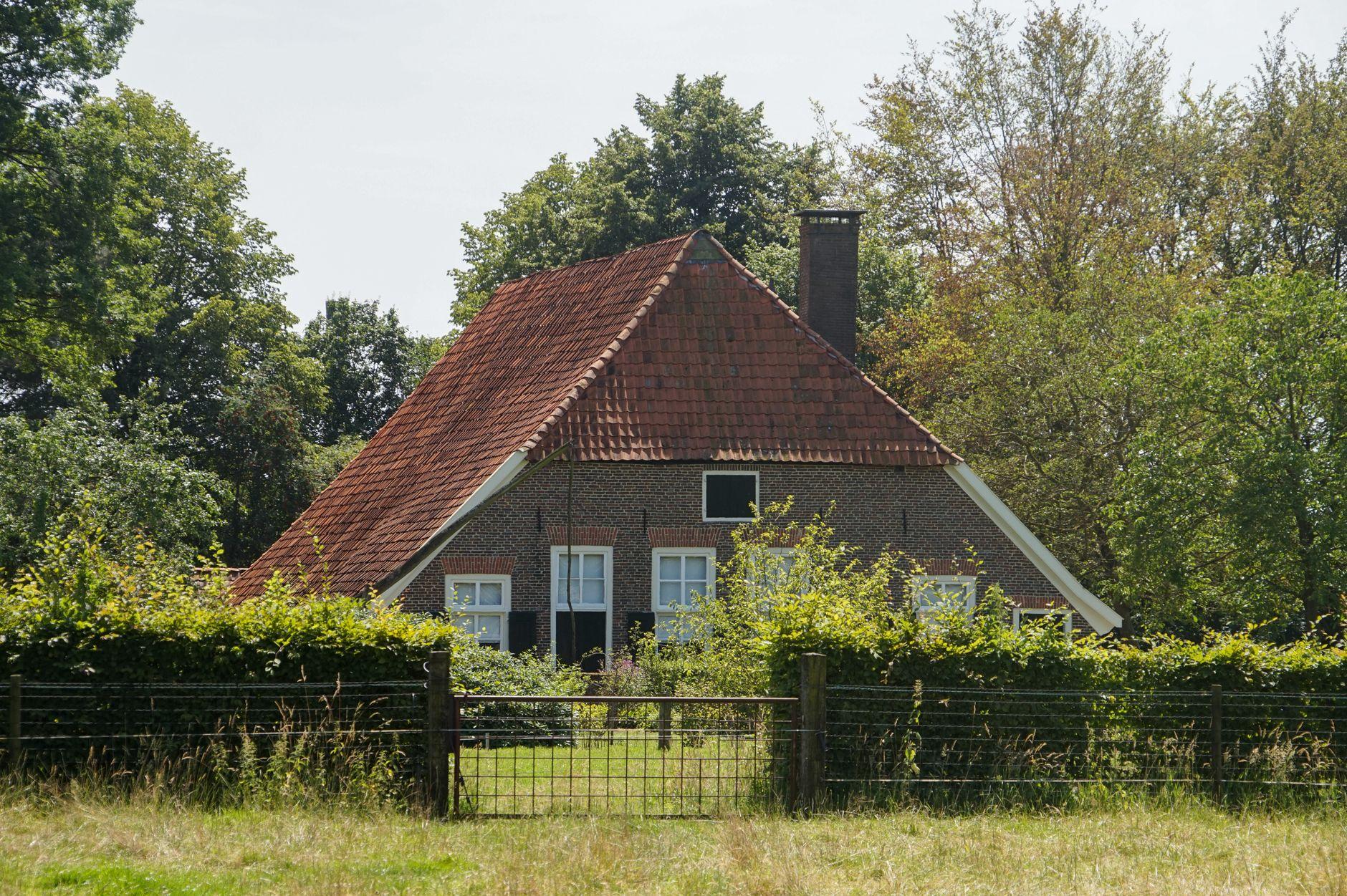
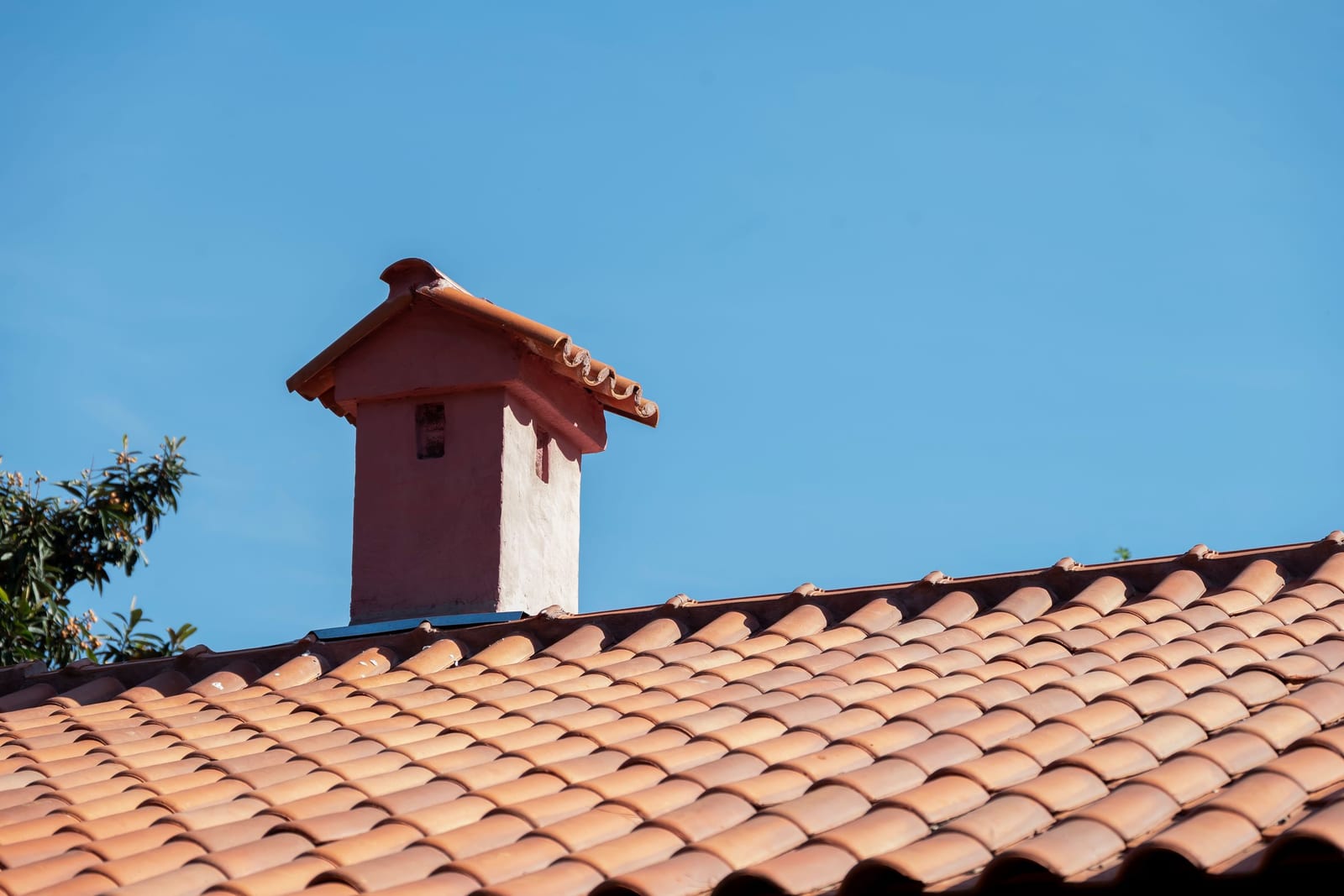
Stand in the street and look at a masonry chimney on a one-story house. Below the eaves, the chimney is surrounded by the house. It sits on its own footing, but the walls, floor and ceiling framing are close around it, and in many homes the chimney touches that framing at one or two levels. Above the roof, nothing is beside it. The upper chimney is a column of brick, mortar and clay tile standing on its own, often several feet tall, with a concrete crown and a metal cap on top.
That free-standing part is where most chimney damage happens in an earthquake. When the ground shakes, the house moves and the chimney moves with it, but the upper chimney behaves like a stick standing up from a moving base. It swings. The longer and heavier it is, the more it swings. In a chimney built without steel, the only thing holding the upper part to the lower part is the bond between mortar and brick. Once a joint near the roofline breaks, the top can rock on that joint, slide off it, or fall.
The pattern is familiar from every strong Southern California quake of the last century, from 1933 Long Beach through 1971 San Fernando and 1987 Whittier Narrows to 1994 Northridge: houses left standing, chimneys broken at or just above the roof.
How to tell whether the top needs rebuilding
Not every damaged upper chimney needs to come down. Cracks in the mortar alone, with the stack still plumb and no movement when pushed, can often be repointed and stitched. The signs that point to a rebuild are different:
- A crack that runs all the way around the stack in one joint, especially at or just above the roofline.
- An upper section that is visibly out of line with the part below it, even slightly.
- Bricks near the top that move when pressed, or have already fallen onto the roof.
- A lean that you can see by sighting along the chimney from a distance.
- A crown that has split into pieces rather than just cracked.
None of these should be judged by climbing onto a roof after a quake. A chimney that has broken at the roofline can drop with little warning, especially in an aftershock. Look from the ground, at a distance, and keep people and cars out of the area where the top would land.
An inspection then answers the question properly. A Level 2 inspection, with a camera through the full flue and a look in the attic, shows where the masonry is still sound and where it is not. That tells us how far down a rebuild has to go. Often it is only the part above the roof. Sometimes damage continues into the attic or lower.
Option one: rebuild in reinforced masonry
The first way to rebuild is to put the brick back, this time with steel inside it. We take the damaged section apart by hand down to masonry that is still bonded and sound. Brick that is in good condition can be cleaned and reused on the faces where matching matters.
The residential building code requires masonry chimneys in high seismic design categories, which includes this part of California, to be built with vertical reinforcing bars running up through the masonry, horizontal ties at regular intervals, and anchorage connecting the chimney to the floor, ceiling or roof framing at each level it passes. A rebuilt section has to meet that requirement, and the city's building department reviews and inspects the work. The result is an upper chimney whose parts are tied together, and tied to the house, instead of relying on mortar bond alone.
A masonry rebuild keeps the original look and material. It also brings a new flue liner, a crown cast with an overhang and drip edge, new flashing and a new cap, because rebuilding the stack is the right time to replace all of those.
Option two: a framed chase with a metal flue
The second way is to rebuild the upper chimney in a different material. Above the roofline, the masonry is replaced with a wood-framed chase, a box built from studs and sheathing, with a listed factory-built metal flue running up inside it. The chase is finished on the outside with stucco, siding or a thin brick veneer so it matches the house, and it gets its own chase cover and cap.
The main advantage is weight. A framed chase weighs a small fraction of a brick stack, so it puts much less load on the house when the ground moves, and there is far less mass to fall. The metal flue has to be matched to the appliance it serves, and a wood-burning fireplace needs a flue system listed for that use. This option suits homeowners who want to keep a working fireplace but would rather not have a heavy masonry stack above the roof.
Option three: take it down
For some families, the fireplace is decoration. If no one has lit a fire in years, there may be no reason to rebuild a heavy chimney at all. The upper chimney can be taken down below the roofline, the roof closed over it, and the fireplace left as a decorative opening or converted to a gas appliance with its own direct vent. This removes the part of the chimney most likely to fail. It is a real option, and we talk it through alongside the other two.
What a rebuild involves in practice
A rebuild starts with an inspection and a written scope. The scope says how far down the work goes, which option you have chosen, what the new liner, crown and flashing will be, and how the chimney will be anchored. A permit is pulled before work begins, and the city inspects at the stages it requires.
On the hillside lots around Rancho Palos Verdes, access is often the hardest part of the job. Steep drives, narrow side yards and tile roofs all shape how scaffolding goes up and how material comes down. We plan for that in the quote and schedule the work for dry weather, since fresh mortar and open roofing both need a few dry days.
The fireplace is out of use from the start of demolition until the new flue is complete and inspected. We give you that time frame in writing at the start.
Before you decide
A rebuild is a large decision, and it should rest on a clear picture of the chimney you have now. If your chimney has not been inspected since a strong quake, start there. Ask for photos and camera stills, and ask the inspector to show you where the sound masonry begins. With that in hand, choosing between reinforced brick, a framed chase or removal becomes a question of how you use the fireplace and how you want the house to look, not a guess.
Saw One of These Signs on Your Own Chimney?
Reading about cracks only goes so far. Golden Poppy films the flue, measures the gap at the wall and shows you what moved. We work from Harbor City across Lomita, Torrance, the peninsula and Long Beach.